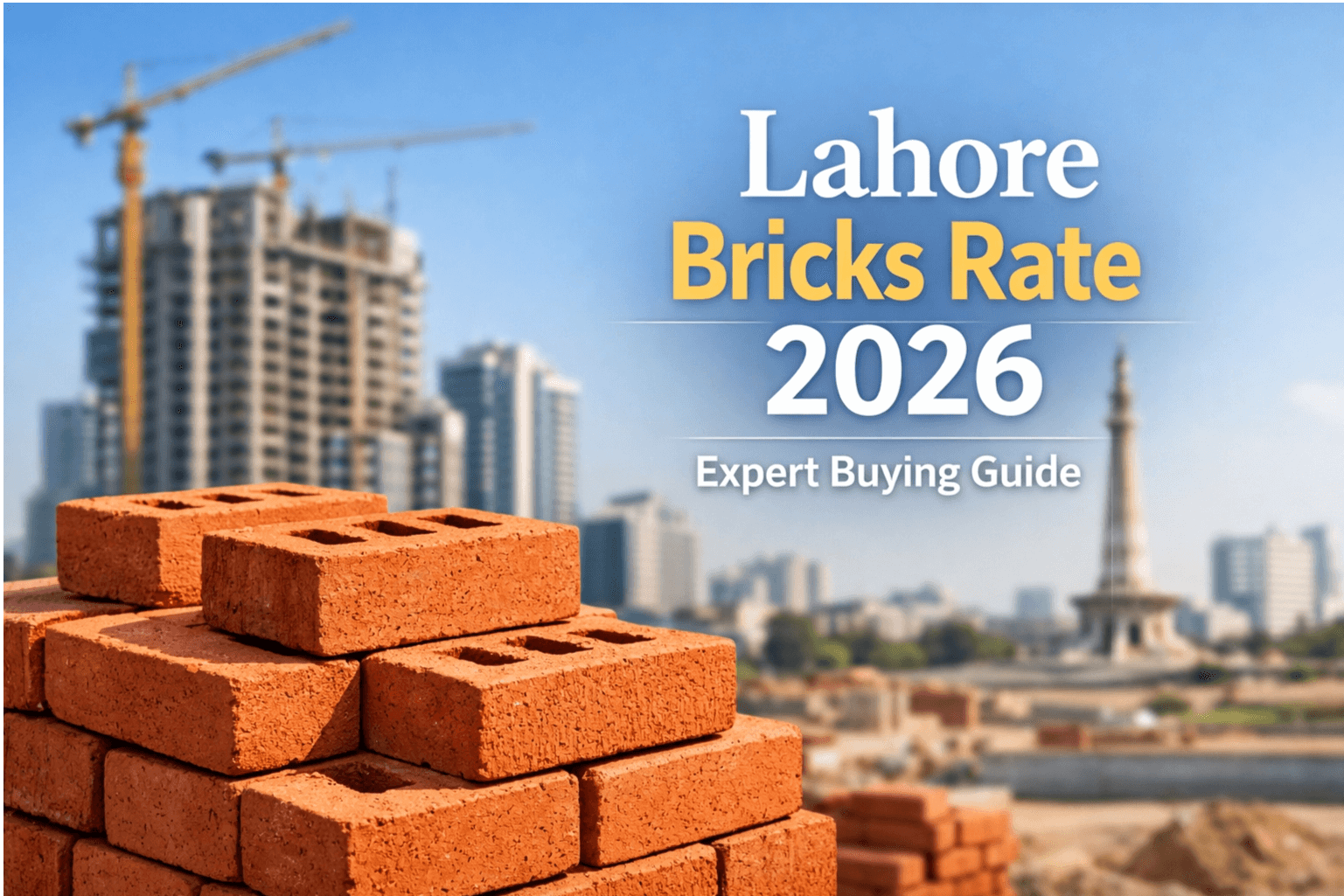
Planning to start a construction project in Lahore? Knowing the current brick rate in Lahore is an essential part if you want your project to last longer. The average brick rate in Lahore today ranges from 12,000 per thousand bricks for red clay bricks to 18,000 for the A-class brick option. Research well before choosing the right type, as it can save you thousands of rupees. Read this detailed guide to learn about the current brick rate in Lahore, including the market factors that influence these rates. What is the Current Brick Rate in Lahore Today? The price of bricks in Lahore differs in terms of quality rates and demand. All prices are approximate and can vary depending on the supplier, location in Lahore and current demand. Brick Type Price per Brick (PKR) Price per 1,000 Bricks (PKR) A-Class (First Class / Awwal) 18 – 19 17,000 – 19,000 A+/ A-Grade 17 – 19 17,000 – 19,000 Standard Red Clay Bricks 12 – 18 13,000 – 19,000 B-Class (Second Class) 12 – 14 12,000 – 14,000 C Class / Kacha / Low Grade 9 – 12 11,000 – 13,000 Machine-Made / Kiln-Made Bricks 14 – 19 16,000 – 19,000 Fly Ash Bricks (Eco-Friendly) 15 – 18 15,000 – 18,000 Concrete Bricks / Blocks 19 – 22 30,000 – 50,000 Hollow Bricks / Blocks 22 – 25 45,000 – 100,000 Fire / Refractory Bricks 150 – 300+ 50,000 – 100,000 Sand Lime / Speciality Bricks 18 – 30 18,000 – 50,000 What Factors Influence Brick Price in Lahore Today? Brick prices in Lahore keep changing according to current market trends. Understand all the factors mentioned below if you want to avoid surprises and make confident purchasing decisions. Consult professional builders if you want your project to be budgeted more smartly. Supply And Demand The price is directly proportional to how many bricks are available in the market vs. how many builders want them. The spring and summer are the peak seasons in which prices are often high. You can expect lower prices during the rainy season and winter. Raw Material Cost Clay is the major ingredient in brick, and its quality greatly affects the price. Bricks made from the Ravi sand or any other premium soil cost more due to their high strength. The cost of cement, flash, and additives in the modern bricks also influences the price. Fuel And Energy Cost The rising fuel prices directly increase the production cost and have a huge influence on the final rate of bricks. A cleaner technology can increase energy costs, adding to the brick rate. Transportation And Logistics Prices are lower when bricks are coming from near, such as within or nearby Lahore. The fuel cost and truck availability can add several hundred to thousands to your final brick cost range. Quality And Brick Grade Premium quality bricks are fired longer and offer higher structural strength. On the other hand, lower-grade or C-class bricks are cheaper as they are made with low-quality raw material. If you value your long-term maintenance, then choosing A-class bricks is highly recommended. Weather Considerations Seasonality also has a role in deciding the price of a brick. During rain, bricks dry slowly, which can push the prices up temporarily. Prices can also get higher due to the lower temperatures in smog control periods during winter. Inflation And Macroeconomy Economic trends in Pakistan also affect brick prices. Currency depreciation can make imported goods more expensive. The labour wages, fuel costs, and raw materials prices can be increased by inflation, affecting the brick rates. Government Policies And Regulations The Punjab government is working seriously on environmental regulations on kiln emissions. A cleaner technology is required, which can raise the brick production costs. Eco-friendly bricks may cost more than other types. What are the Different Types of Bricks Available in the Punjab Brick Market? The following are some major types of bricks available around Punjab. Standard Clay / Red Clay Bricks Red bricks are made from traditional or natural clay that is reddish in colour. These bricks are commonly used for residential homes and general construction projects around Pakistan. Major reasons for people choosing red bricks are their affordability, durability, and thermal insulation. Awwal / A Grade Bricks Burnt clay bricks made with dense firing and known for minimal defects. A-class bricks are commonly used for visible facades and low-bearing walls. They offer low water absorption and better long-term performance. B Class bricks Fine clay bricks that have slightly lower quality than grade ones. These bricks may have minor surface irregularities that is why their price is lower. B-class bricks are best for walls which will be plastered later. C-Class Or Third-Class Bricks Also known as Kacha or Khingar bricks, C-Class bricks usually have an irregular shape and less burn. They are typically used for temporary structures or areas where structure does not matter. Builders do not recommend using third-class bricks for load-bearing walls. Machine-Made / Kiln-Made Bricks These bricks are produced with the modern kiln process. They portray uniform dimensions and lower waste. Machine bricks are commonly used in urban and commercial projects. Providing faster construction is also a unique benefit of choosing kiln-made bricks. Fly Ash Bricks Fly ash bricks are made from an eco-friendly process using fly ash, cement and water. They are gaining popularity in Pakistan due to their long life and performance. The benefits include better insulation, lightweight, and strong, with low water absorption. Concrete Bricks High-strength brick option made from cement, sand, and aggregates. Concrete bricks are commonly used for areas needing higher compressive strength than traditional clay. Professional construction companies choose them because of their uniform shape and consistent performance. Hollow Bricks Or Blocks Large brick blocks with hollow cores offer faster masonry work. Hollow bricks provide better thermal insulation and are lighter in weight. They are typically used for multi-story buildings to reduce load and partition walls. Fly Ash Bricks vs. Red Bricks: Which is Better For Your Project? Many brick